How to Test the Quality of the World's Most Precious Spice
Saffron—the "red gold"—is one of the world's most fascinating and expensive spices. Its vibrant red color, incomparable aroma, and slightly bitter taste make it essential in gourmet cuisine. But precisely because it's so precious, the market is flooded with counterfeits and inferior products.
As your trusted partner for premium saffron, we at AKU Saffron want to equip you with the knowledge you need to ensure you only purchase real, high-quality saffron. Say goodbye to uncertainty and nasty surprises! Here is our comprehensive guide on how to test saffron for authenticity.
Why Is It Crucial to Recognize Real Saffron?
Obtaining just one gram of saffron threads requires the laborious harvest of about 150 to 200 crocus flowers—all done entirely by hand. This enormous effort justifies the high price, but it also makes the spice a target for fraudsters. Fake saffron is often nothing more than dyed plant fibers (like safflower or corn silk), turmeric powder, or inferior parts of the saffron stigma.
Buying a counterfeit isn't just a waste of money; it robs you of the unique culinary experience: fake saffron delivers neither the desired intense color (Crocin), nor the characteristic aroma (Safranal), nor the typical bitter-aromatic taste (Picrocrocin).
The most important rule: Always buy whole saffron threads, never ground powder. Powder can be stretched extremely easily, and it’s almost impossible for a layperson to test its authenticity.
Safran Echtheit testen: 5 einfache Tests für zu Hause
You can perform a reliable initial check using your senses and a few basic household items:
1. The Visual Appearance: Shape and Color
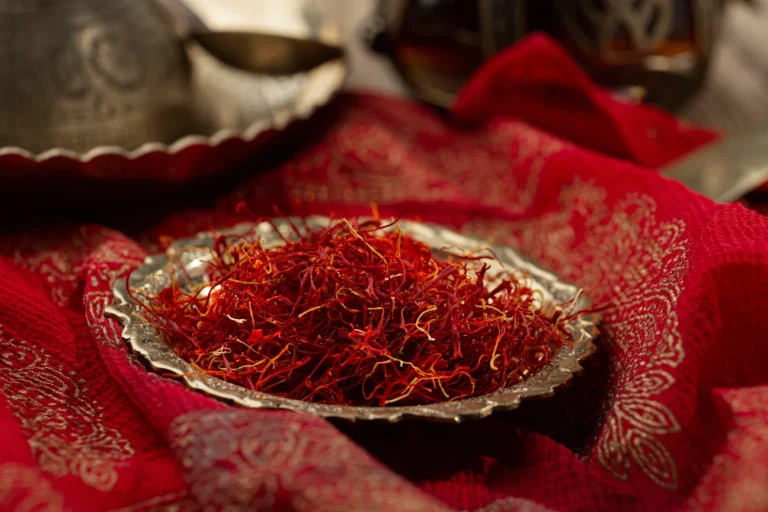
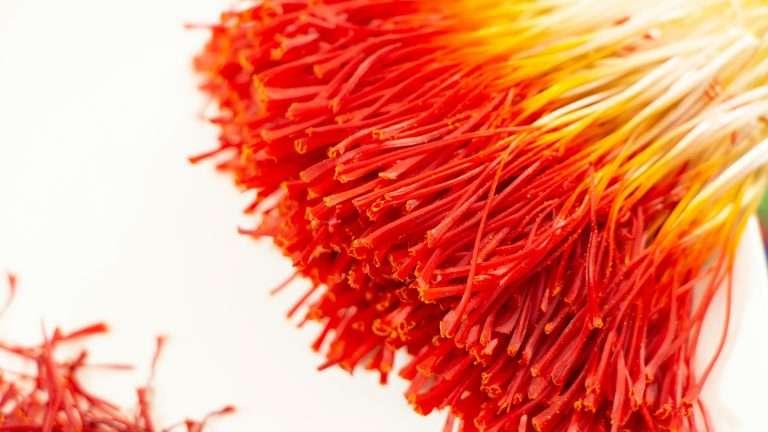
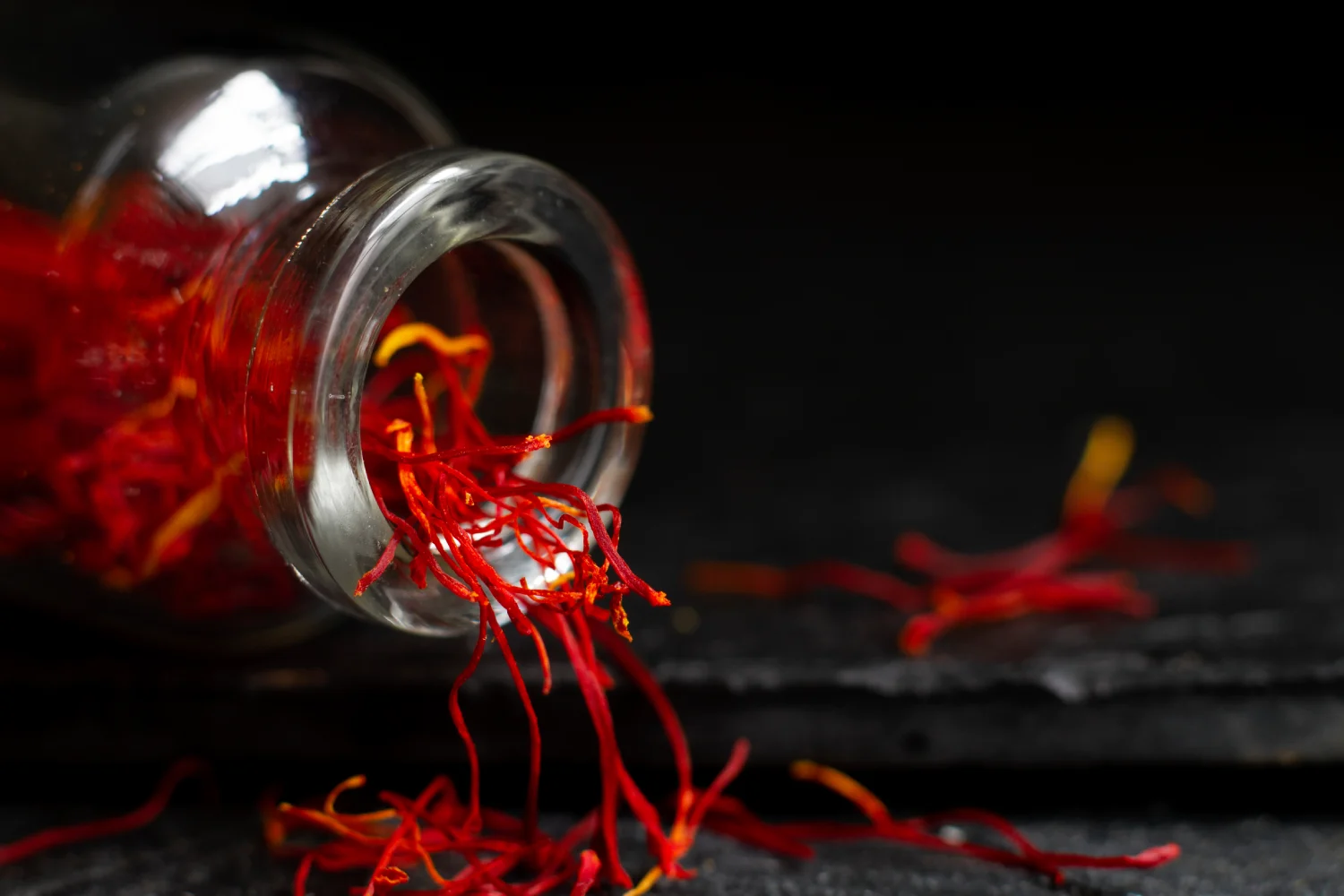
Real saffron is deep red, sometimes with slight orange-yellow tips, as these parts of the stigma contain less coloring agent. But pay close attention to the shape:
- Real: The threads are typically 2 to 4 cm long, slightly irregular, and have a characteristic, trumpet-shaped widening at one end—this is the style of the crocus flower. High-quality saffron (like Sargol or Negin) consists almost entirely of the red stigma tips.
- Fake: Uniformly shaped, extremely red threads without any yellow tips may be dyed fibers. If the threads look too flat, too brittle, or cylindrical, be wary. Seeing yellow threads in the package indicates either lower quality (containing parts of the yellow style) or a complete fake (e.g., safflower).
2. Wie riecht Safran: Süßlich, aber nicht zu süß
The saffron aroma is a critical indicator, determined by the compounds Safranal and Picrocrocin.
- Real: The fragrance is intense, complex, and unmistakable. It is often described as sweet-floral, with notes of honey, hay, earth, or tobacco. Some find it to be slightly medicinal. It should smell strong, but pleasant.
- Fake: If the saffron has little or no smell, or smells musty or only like hay/grass, it is either old or of poor quality. An overly chemical or flat smell is a clear red flag.
3. The Taste Test: Sweet Smell, Bitter Taste
Place a thread on your tongue—the sample doesn't need to be large. The taste provides a crucial clue, as the compound Picrocrocin is responsible for the bitterness.
- Real: Although real saffron smells sweet, it tastes distinctly bitter and spicy-aromatic.
- Fake: If the thread tastes sweet or is tasteless, it is most likely a fake. A metallic or unpleasantly bitter taste can also indicate artificial dyes.
4. The Water Test (Cold Water Test)
This is the simplest and most informative at-home test. Put a few threads in a small glass of cold or lukewarm water or milk.
- Real: Genuine saffron releases its color very slowly. The water turns golden yellow to yellow-orange within the first 10 to 15 minutes. The threads themselves retain their vibrant red color and do not lose it.
- Fake: With dyed fakes, the color leaches out immediately and very quickly, and the water may turn murky or even red. The threads often lose their color afterwards, becoming pale or white.
5. The Baking Soda Test
This chemical test can help determine if turmeric or other yellow fillers were used. Dissolve a pinch of baking soda (sodium bicarbonate) in a little water, then add the saffron threads.
- Real: Real saffron will turn the solution an intense yellow.
- Fake: If the solution turns murky or red, it likely contains turmeric or another dye.
6. The Rub Test (Rubbing the Threads)
Remove the threads after the water test and gently rub them between your thumb and forefinger:
- Real: Real, dried saffron threads remain intact and firm. They will stain your skin yellow-orange.
- Fake: Fake or heavily stretched fibers often crumble like dust or dissolve completely.
Achtung beim Safran Kauf: Die wichtigsten Warnsignale
Even the most experienced chef can be deceived. Therefore, look for the following warning signs when making a purchase:
| Warning Sign | Meaning |
| The Price is Too Good | Price is the most honest indicator. Because the harvest is so laborious, real saffron cannot be extremely cheap (Benchmark: reputable prices often start around €10 to €20 per gram). A "bargain" is almost always a fake. |
| Ground Saffron | Never buy ground saffron. The risk of it being stretched (with turmeric, paprika, starch) is too high, and testing is nearly impossible. |
| Moisture | If the saffron feels moist, sticky, or clumped together, it may have been sprayed with water, oil, or sugar to increase the weight. Real threads are dry and slightly brittle. |
| Missing Information | A reputable dealer should be able to provide information on the origin, harvesting method, and ideally, current lab reports (ISO 3632 Class I). |
Our AKU Saffron Promise: Trust in Class I Quality
Buying saffron is, and will always be, a matter of trust. That's why we at AKU Saffron are committed to the highest level of transparency and purity.
Guaranteed Purity: We grow our saffron using only sustainable methods, completely free of pesticides and synthetic fertilizers. This ensures we harness the natural power of the saffron crocus to provide you with a truly pure product.
Current Quality Verification (Eurofins WEJ Contaminants GmbH, Test Report AR-733-2024-00202700-02):
- Purity and Safety: No pesticide residues were detected above the reporting limit. This verifies the purity of our cultivation methods.
- Top-Tier Quality (Category I): Our saffron fulfills the strict criteria of Category I as defined by ISO 3632-2 (in effect since July 2012) and achieves even higher results across all three critical areas:
| Parameter | AKU Saffron Test Result | ISO 3632-2 Category I (Minimum Value) |
| Crocin (Coloring Strength) | 219±7 | 190 |
| Picrocrocin (Bitterness) | 86±3 | 70 |
| Safranal (Aroma Strength) | 37±2 | 20 |
More than 90% of the world's saffron comes from Iran – mainly from regions such as Khorasan.
The dry soil, the special climate and centuries-old cultivation methods produce an aroma that is unique in the world.
AKU Saffron works directly with experienced farmers in Iran, without any middlemen. This guarantees:
- fair prices for farmers
- absolute purity
- To distinguish real saffron from fake saffron, you should always look for whole threads. Check the taste (bitter, not sweet), the smell (intense, floral) and the color release in cold water (slow, golden yellow, the threads retain their color). When buying, always trust a reputable retailer such as AKU Safran, who can guarantee you quality and transparency. This ensures that you are truly enjoying “red gold” in its purest form.
To tell real saffron from a fake, you should always look for whole threads. Check the taste (bitter, not sweet), the aroma (intense, floral), and how the color releases in cold water (slowly, golden-yellow, with the threads keeping their color). Always trust a reputable supplier like AKU Saffron, who can guarantee you quality and transparency. This is how you ensure you're truly enjoying the "red gold" in its purest form.