Safran kaufen in Wien: Das Erbe des Crocus Austriacus
When you think of Vienna today, images of magnificent coffee houses, St. Stephen's Cathedral, and classical music immediately come to mind. You can almost smell the scent of freshly ground coffee and apple strudel. But there is a chapter in this city's history that has been almost entirely forgotten – a chapter that does not smell of coffee, but of the most noble spice in the world: Saffron. Saffron.
For lovers of this precious spice, it may sound surprising, but for centuries, Vienna and its surroundings were not only a center for trade but also for the cultivation of saffron. At Aku Saffron, we believe that you can only understand the quality of today if you know the history of yesterday. So, let’s dive into the fascinating world of the "Crocus Austriacus."
A Historical Retrospective: How Saffron Came to Vienna
The history of saffron in Austria goes back a long way, deeper than many would suspect. Legends and historical records suggest that the precious bulb found its way into the region as early as the late 12th century, specifically around 1198. It is said that the Crusader Walther von Merkenstein brought the first saffron bulbs back from the Holy Land – as a gift for his beloved.
Although this story carries a romantic veil, one thing is historically proven: The climate in the Vienna Basin and Lower Austria was surprisingly well-suited for Crocus sativus. The sandy loam soils and the Pannonian climate influences offered conditions that resembled those in the classic cultivation areas of the Orient.
The Golden Age: Vienna as a Saffron Center (15th - 19th Century)
The true heyday of Viennese saffron began in the 15th century and extended well into the 19th century. During this time, saffron was not just an imported good, but a domestic product of the highest quality.
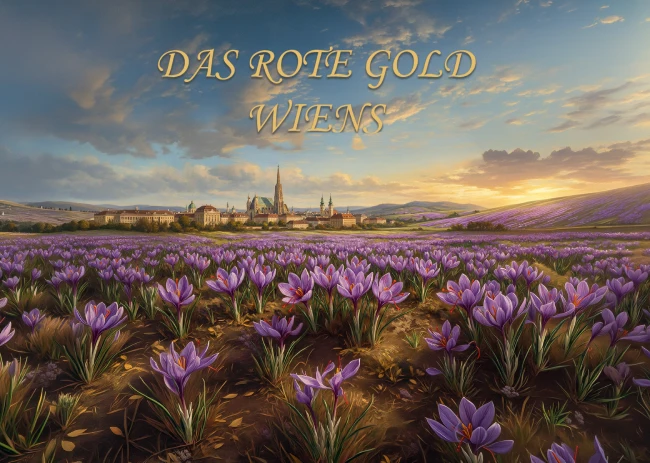
Imagine this: If you walk across the elegant Albertinaplatz in Vienna's first district today, you are standing on historical saffron ground. Historical documents prove that exactly there, below the former St. Paul's Church, extensive saffron gardens bloomed. The spice was also cultivated in front of the Widmertor (in the area of today's Wieden and Margareten districts).
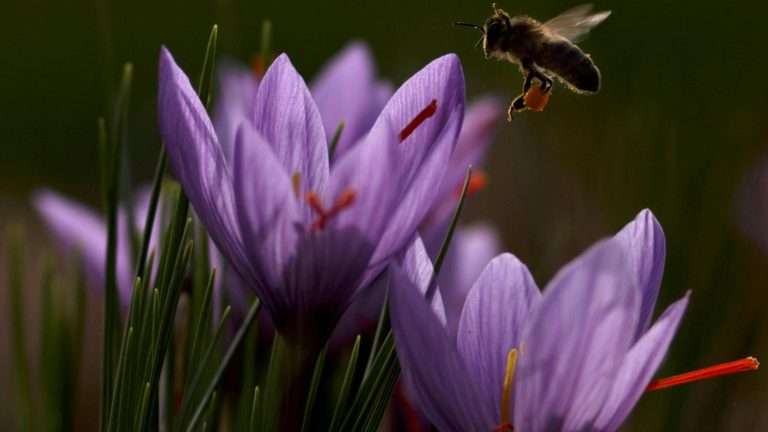
However, Vienna was not alone. The entire surrounding area, especially Klosterneuburg, the Wachau, and the Weinviertel, was bathed in a sea of violet flowers when autumn arrived. While Krems on the Danube often functioned as a central trading hub, Vienna was the pulsating heart of consumption and export. Between 1812 and 1816, Vienna reportedly exported around 2,000 kilograms of saffron per year – a gigantic amount for that time, considering how light a single saffron thread is.
"Crocus Austriacus": Better Than Anything Else
Why was Austrian saffron so coveted? It wasn't due to quantity, but rather the extraordinary quality. In historical writings from the 18th and 19th centuries, including works by theologian Ulrich Petrak (1797), the so-called "Crocus Austriacus" was praised as the best saffron in Europe.
It was considered more aromatic, more color-intensive, and purer than the competition from the Mediterranean. A document from 1844 confirms that Viennese saffron was even preferred over French saffron, which was considered the standard for quality at the time. Its coloring power was legendary, and it was worth its weight in gold at the courts of Europe.
Culinary Heritage: Saffron in Old Viennese Cuisine
This availability of high-quality, local saffron left deep traces in traditional Viennese cuisine, which we often overlook today. While saffron is now often primarily associated with Mediterranean dishes like paella or risotto, it was omnipresent in Baroque Vienna.
Classic dishes of Viennese cuisine were unthinkable without the "yellow gold":
- Beef Soup (Rindsuppe): A true Viennese festive soup had to be "golden." Saffron gave it not only the color but also a fine, earthy note that elevated the flavor of the meat.
- Gugelhupf: Many old recipes for this iconic Austrian cake contained saffron to give the dough a sunny color and an exquisite aroma.
- Semmelkren: A classic side dish for boiled beef was often refined with saffron.
Back then, saffron was not just a spice, but also medicine. Pharmacists in Vienna sold it as a remedy for stomach ailments, to lift the mood, and to strengthen the heart.
Erleben Sie die Qualität, die Wien einst berühmt machte. [Hier Premium Safran kaufen]
The Decline of a Tradition
If Vienna was once so famous for its saffron, why did it disappear? The end of the "Crocus Austriacus" came gradually towards the end of the 19th century. Several factors came together:
- Climate Changes: Historians suspect that colder winters and, above all, early frosts in autumn destroyed the sensitive flowers before they could be harvested.
- Economic Change: Saffron cultivation is extremely labor-intensive. With industrialization, labor costs rose, and cheaper imports from abroad made domestic cultivation unprofitable.
- Forgotten Trade Routes: With the expansion of railway networks, it became easier to import exotic spices from the Far East, which displaced local production.
By around 1900, saffron cultivation in Vienna and Lower Austria had practically ceased. The gardens at Albertinaplatz gave way to magnificent urban buildings, and the knowledge of cultivation fell into oblivion.
The Renaissance and the Connection to Aku Saffron
In recent years, Austria has experienced a small renaissance in saffron cultivation, driven by enthusiasts wanting to revive old traditions. But the lesson from history remains: Quality is timeless. Qualität ist zeitlos.
The history of Vienna and saffron shows us that this spice is more than just an ingredient – it is a cultural asset. It requires patience, passion, and the right conditions to thrive.
At Aku Saffron, we feel connected to this historical obligation to excellence. Even though we live in a globalized world today, our standard remains the same as that of the old Viennese saffron masters: Only the purest, most color-intensive, and aromatic threads deserve to make it into your kitchen.
We invite you to rediscover a piece of this magic with our products. Cook a classic Viennese soup or refine modern dishes – and think of the time when Vienna shone in a sea of violet flowers.