Safrantee Zubreitung & Wirkung: Mehr als nur ein Genuss
Saffron tea is one of the oldest and most noble beverages of Persian and Oriental culture. For centuries, it has been valued not only for its unique aroma and golden color, but also for its calming and strengthening effect on body and mind. In this article, you will learn how to properly prepare classic saffron tea, what you should pay attention to, and why quality and technique play a decisive role.
The Significance of Saffron Tea
In many cultures, especially in Iran, saffron tea is served as a symbol of hospitality, well-being, and luxury. It is drunk on special occasions, after meals, or simply for relaxation. Saffron is considered “red gold” — even a small amount is enough to unfold flavor, color, and effect.
Entdecken Sie auch die Geschichte des [Safran in Wien]
Ingredients You Need
For classic saffron tea, you need only a few but high-quality ingredients:
- 5–10 saffron threads (Negin or Super Negin recommended)
- Für das beste Aroma empfehlen wir unsere [Safran Fäden Kategorie 1]
- 250 ml hot water (not boiling)
- Optional: honey, rock sugar, or sugar
- Optional: cardamom, rose water, or cinnamon
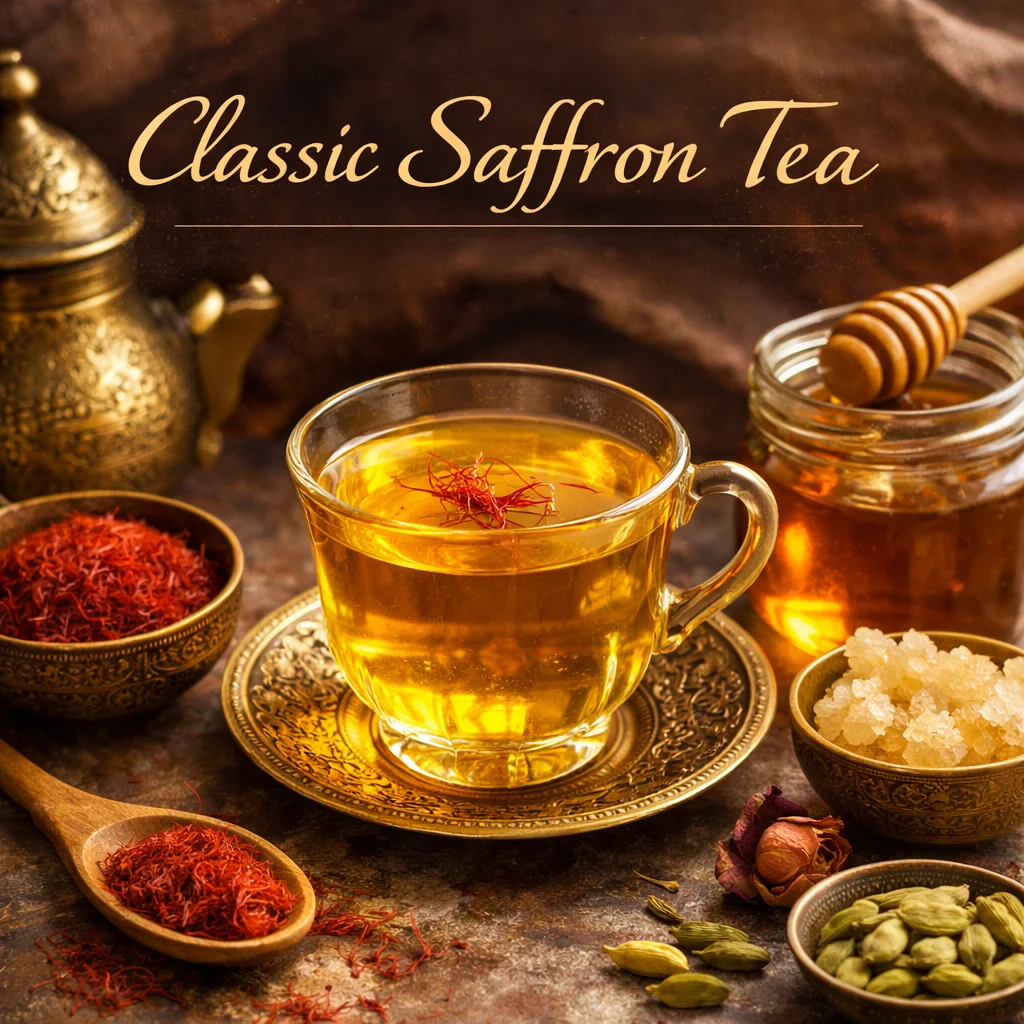
The quality of the saffron is crucial. Real saffron gives the tea an intense but not bitter aroma as well as a warm golden-yellow color.
Step-by-Step Preparation
Rezept für Safrantee
1. Safran vorbereiten
Zerreibe die Safranfäden leicht in einem Mörser oder zwischen zwei Löffeln. Dadurch lösen sich Aroma und Farbe später besser im Wasser. oder ( Safran Blooming Technik)
2. Heat the water correctly Heat the water to about 80–90 °C. Boiling water can destroy the delicate aromatic compounds and make the tea bitter.
3. Let the saffron steep Place the ground saffron into a cup or teapot and pour the hot water over it. Cover the cup and let the tea steep for at least 10–15 minutes.
4. Refine to taste After steeping, you can sweeten the tea with a little honey or rock sugar. Cardamom or a few drops of rose water give it an oriental note.
Taste and Aroma
A well-prepared saffron tea tastes mild, slightly floral, and warm. It should never be sharp or bitter. The color is a clear golden yellow — neither red nor cloudy.
zu wissen, wie echter Safran riecht.
Effect and Benefits
Saffron tea is traditionally attributed with a variety of positive effects:
- Mood-lifting and relaxing
- Supports digestion
- Can help with stress and fatigue
- Often used as a gentle evening drink
It is important to enjoy saffron in moderation. Just a few threads are enough to achieve the desired effect.
Serving Tips
- Serve in small glass cups to showcase the color
- Ideal after meals or in the evening
- Perfect as an accompaniment to oriental pastries
Classic saffron tea is more than just a beverage, it is a ritual. With high-quality saffron, the right temperature, and a bit of patience, a noble tea is created that unites pleasure and tradition. Less is more: quality, time, and mindfulness are the key.