small spice, big-hearted benefits
Saffron is much more than just a golden spice for special occasions—it can also become part of your everyday life. Saffron has been used in traditional medicine for centuries, and modern studies show that its ingredients can indeed have positive effects on the body and mind.
Why saffron?
Saffron (Crocus sativus) contains active compounds such as crocin, crocetin and safranal that give it aroma, color — and biological activity. Modern studies point to antioxidant and anti-inflammatory actions as core mechanisms behind many of saffron’s effects.
How to use saffron in everyday life
- Morning saffron milk: steep a few saffron threads in warm milk (or plant milk) for 5–10 minutes — a comforting way to start the day.
- Golden rice & grains: add a pinch of soaked threads to rice, quinoa or millet while cooking for aroma and color.
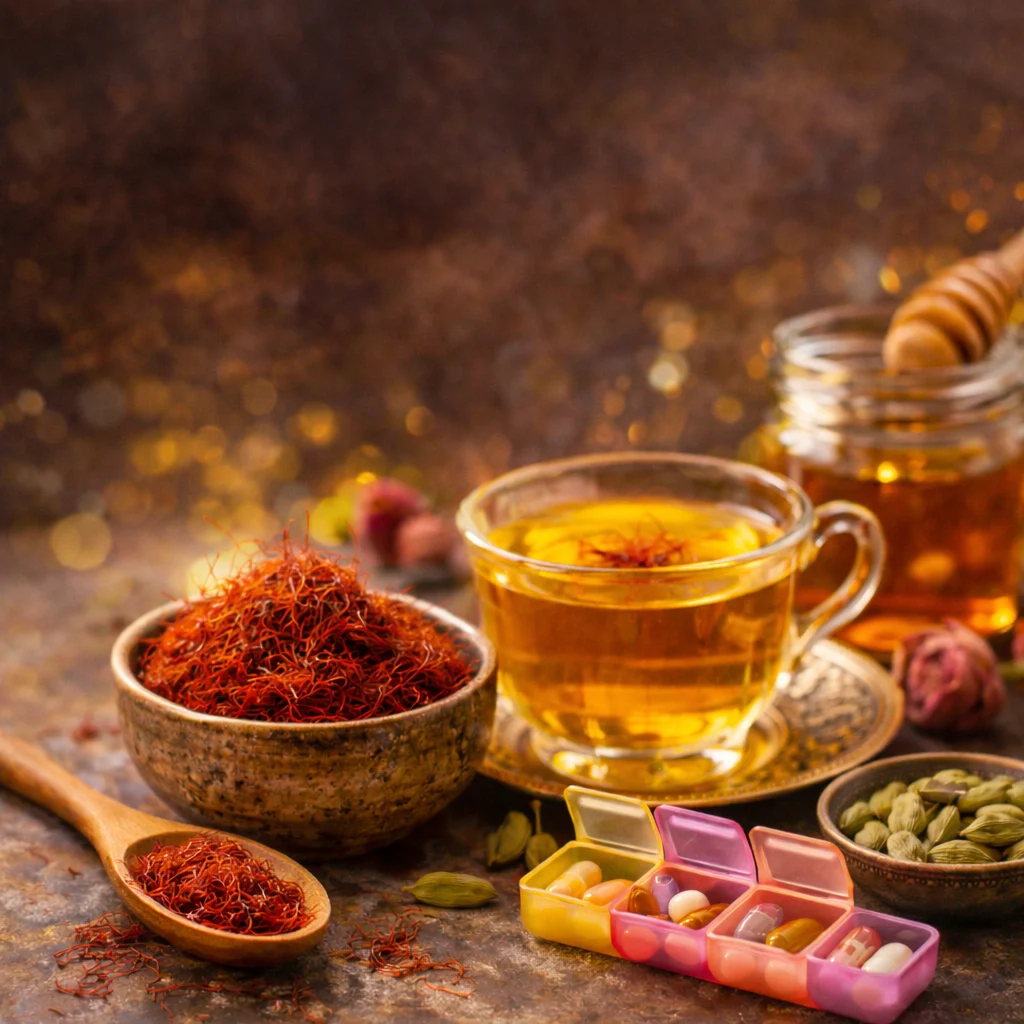
- Saffron tea or infusion: steep threads in hot water (optionally add honey and lemon) for a calming cup.
- Smoothies & yogurt: grind a tiny pinch into smoothies or stirred into yogurt for subtle flavor and color.
- Baking & desserts: infuse cream or syrup with saffron for custards, cakes or puddings.
- Topical use (cosmetic): traditional face masks sometimes include saffron mixed with yogurt or honey, mainly for scent and anecdotal skin-brightening (scientific evidence for topical benefits is limited).
Die Vorteile von Safran
Mood & mild-to-moderate depression durch Safran
Several randomized trials and reviews have found that saffron supplementation (typically in standardized extracts at doses used in trials, e.g., ~20–30 mg/day of saffron extract) can reduce symptoms of mild-to-moderate depression and anxiety, performing comparably to some antidepressant medications in small trials. This is one of the most consistently reported clinical effects.
Saffron hilft bei PMS-Symptomen
Clinical trials reported that saffron reduced the severity of premenstrual symptoms and improved mood across menstrual cycles versus placebo in randomized studies. This is a historically well-studied area for saffron.
Cognitive support and mild cognitive impairment / Alzheimer’s research
Small randomized trials and systematic reviews indicate saffron may improve certain cognitive outcomes and in some studies showed effects comparable to conventional Alzheimer’s drugs (in short-term trials). Research is promising but still limited in scale — larger long-term studies are needed.
Antioxidant / anti-inflammatory and general cellular protection
Laboratory and clinical studies suggest saffron’s constituents can reduce oxidative stress markers and dampen inflammatory pathways — mechanisms that could underlie benefits across mood, cognition, and metabolic health. Meta-analyses and systematic reviews support saffron’s antioxidant effects, although study designs and outcomes vary.
What the research does NOT (yet) prove
Saffron shows promise in multiple areas, but evidence quality varies. Large, long-term, multi-center human trials are still limited. Saffron is best considered a complementary, evidence-backed food/supplement — not a replacement for prescribed medications or medical care.
Safety and dosage — practical guidance
- Food use: A few strands per dish are perfectly safe.
- Typical clinical doses in many trials: roughly 20–30 mg/day of saffron extract for mood.
- Food use: saffron is regarded as safe (FDA lists it as an allowed food additive / GRAS for culinary use).
- Pregnancy & breastfeeding: saffron extracts have been shown to have uterine-stimulating properties in some animal studies; pregnant or breastfeeding people should avoid therapeutic doses and consult a healthcare professional. Sollten Safranpräparate meiden, da Safran in hohen Dosen die Gebärmutter stimulieren kann.
- Interactions & medical conditions: saffron may interact with certain medications (e.g., antidepressants, blood thinners). Anyone on medication or with a serious condition should consult their doctor before using medicinal-strength saffron supplements.
Short practical FAQ
Q: How much saffron is safe to add to food?
A: Culinary amounts (a few threads per dish) are safe and traditional. Therapeutic supplements use measured extracts — follow the product label and consult your physician if you’re unsure.
Q: Can saffron help my mood or sleep?
A: Some clinical trials show mood benefits at standardized extract doses; small studies also suggest improvements in sleep quality. These are promising but not a substitute for medical treatment when needed.
Q: Should everyone take saffron supplements?
A: No — supplements are helpful for some people and unnecessary for others. Culinary use is broadly safe; take supplements only per label and after medical advice if you have conditions or take medications.
A touch of saffron can not only bring flavor and color to your life, but also potentially support your well-being. Whether as a fragrant tea in the evening or as a golden ingredient in your favorite dish, saffron is a small, natural investment in health and happiness.
Schenken Sie Blumen mal anderes
References
- Anaeigoudari F. et al. A review of therapeutic impacts of saffron (Crocus sativus L.). (Antioxidative & entzündungshemmende Wirkung)
- Ayati Z. et al. Saffron for mild cognitive impairment and dementia: systematic review and meta-analysis. BMC Complement Med Ther. 2020.
- Agha-Hosseini M. et al. Crocus sativus L. (saffron) in the treatment of premenstrual syndrome: a randomized controlled trial.
- Abedi A. et al. Effect of saffron supplementation on oxidative stress markers: systematic review and meta-analysis. Front. Med. 2023.
- WebMD / Drugs.com / FDA – Angaben zu Sicherheit, Dosierung und GRAS-Status